How Social Media Is Changing the Entertainment Industry
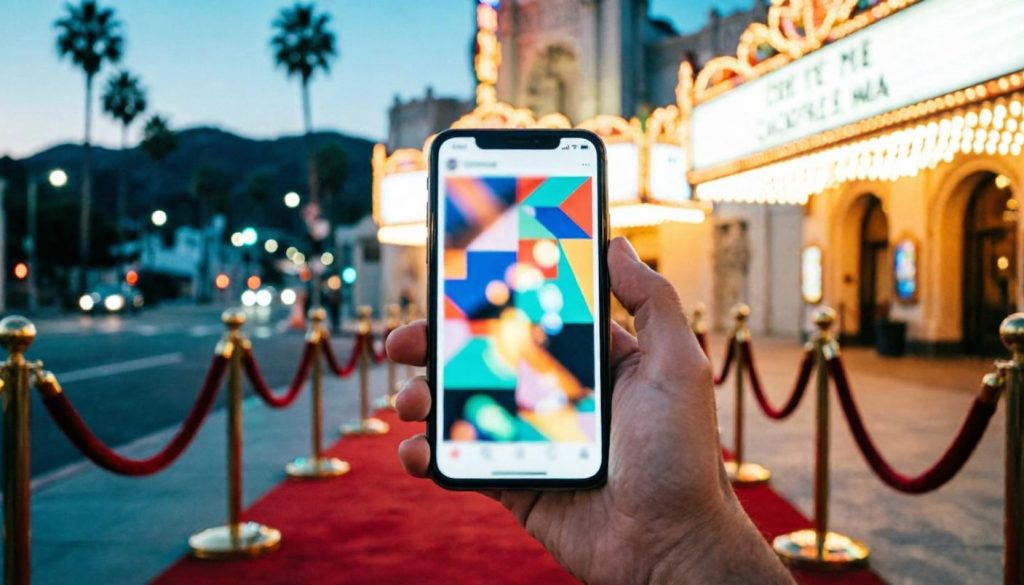
For most of Hollywood’s history, the relationship between studios and audiences was relatively straightforward. Movie studios produced films, newspapers and television programs reviewed them, advertising campaigns promoted them, and audiences decided whether to buy a ticket. Celebrities existed at a carefully maintained distance from the public, appearing primarily through interviews, premieres, magazines, and talk shows.
The rise of social media has disrupted that model. Platforms such as Instagram, TikTok, YouTube, and X have transformed how films are promoted, how celebrities maintain their relevance, and how audiences decide what deserves their attention. Hollywood no longer communicates with viewers through a handful of traditional media outlets. Instead, it operates within a constant stream of posts, videos, memes, reactions, reviews, and conversations generated by both celebrities and ordinary users.
The result is an entertainment industry in which popularity is increasingly shaped by participation. A film does not simply need to be released; it needs to become part of the online conversation.
Social Media Made Hollywood More Immediate
Traditional movie marketing depended heavily on scheduled campaigns. A studio might release a poster, followed by a trailer, television advertisements, interviews, and finally the theatrical release. Between those events, there was relatively little interaction between a production and its audience.
Social media has eliminated much of that distance.
A casting announcement can generate thousands of reactions within minutes. A behind-the-scenes photograph can circulate globally before a traditional entertainment publication has written about it. A celebrity can respond directly to fans, while audiences can collectively speculate about a trailer, upcoming sequel, or casting decision.
This constant interaction has changed what it means for a movie to be “popular.” Popularity is no longer measured only by box-office revenue or television ratings. It can also be seen through trending topics, TikTok videos, Instagram engagement, YouTube discussions, memes, fan edits, and online searches.
The audience has therefore become part of Hollywood’s promotional infrastructure. Viewers do not simply consume advertising; they reproduce and reinterpret it.
TikTok Can Turn a Movie Into a Cultural Moment
TikTok has been particularly influential because its algorithm can expose users to content from films, actors, and creators they had no previous interest in. A scene, song, interview clip, or piece of dialogue can suddenly become part of the platform’s broader culture.
This is especially valuable for movies that might otherwise struggle to compete with major franchise releases. A film does not necessarily need the largest advertising budget to attract attention if users begin producing their own content around it.
The phenomenon can take several forms. Users might recreate a scene, discuss a character, recommend the movie to followers, create an edit featuring an actor, or simply explain why they found the film memorable. Each video can introduce the project to another group of potential viewers.
Hollywood has increasingly adapted to this environment. Marketing departments now design campaigns with social platforms in mind from the beginning. Trailers are cut into shorter clips, actors participate in creator interviews, and studios encourage cast members to produce content that feels native to the platform rather than like conventional advertising.
This distinction matters. Audiences are often more receptive to entertainment content when it feels like something they discovered rather than something they were explicitly sold.
Instagram Maintains Celebrity Visibility
If TikTok is particularly effective at creating viral moments, Instagram has a different function. Its emphasis on photographs, short videos, Stories, and curated personal branding makes it useful for maintaining a celebrity’s visibility over long periods.
An actor does not disappear from public attention simply because they do not currently have a movie in theaters. They can share photographs from a production, attend an event, post a behind-the-scenes image, or collaborate with another celebrity. Their audience remains active between projects.
This has significant implications for the concept of celebrity itself.
Historically, maintaining star status depended partly on continued exposure through magazines, television, and entertainment journalism. Today, celebrities can manage much of that exposure themselves. They can decide which aspects of their lives to show, communicate directly with followers, and develop a recognizable online identity without relying entirely on traditional media organizations.
For Hollywood, that identity can become an extension of a film’s marketing campaign. When an actor promotes an upcoming project to millions of followers, the studio is effectively accessing an established audience that already has a relationship with the performer.
YouTube Created a New Layer of Film Criticism
Social media has also changed how audiences discuss movies after—or even before—they see them.
YouTube has created a substantial ecosystem of film reviewers, commentators, video essayists, and entertainment personalities. These creators can analyze trailers, discuss performances, explain filmmaking techniques, predict awards prospects, and review movies immediately after release.
Their influence exists alongside traditional film criticism rather than simply replacing it.
The difference is that online criticism is often more participatory. Viewers can respond in comments, make their own videos, share clips, and continue the discussion across other platforms. A single review can become the starting point for a much larger conversation.
This has changed the timeline of movie reception. Audiences may encounter dozens of opinions about a film before purchasing a ticket. By the time they enter a theater, they may already know which scenes people are discussing, which performances are receiving praise, and which moments have become memes.
In some cases, the online conversation becomes almost as important as the film itself.
Social Media Can Revive Older Movies
One of the more unexpected consequences of social media is its ability to bring attention back to movies that have already left theaters.
A film released years earlier can suddenly become popular because a particular scene becomes a meme, an actor gains renewed attention, or users begin recommending it to one another. Streaming services make this revival even easier because audiences can immediately watch a title once it starts trending.
This creates a feedback loop between Hollywood’s past and present. Older movies can become relevant to younger audiences without requiring a conventional theatrical re-release or large advertising campaign.
The same process can happen with television shows. A series that originally received modest attention may find a much larger audience after clips or discussions circulate online. Social media therefore gives entertainment companies an additional opportunity to extract value from older content.
Social Media Is Creating New Routes Into Hollywood
Perhaps the most important change is that Hollywood no longer has complete control over who becomes famous.
YouTube creators, TikTok personalities, comedians, musicians, and other internet personalities can build enormous audiences before receiving opportunities from traditional entertainment companies. Their existing followings can make them attractive to studios because they arrive with an audience already invested in their work.
This does not mean that social media has eliminated the traditional Hollywood system. Major studios, agents, casting directors, producers, and established celebrities still have enormous influence. Instead, the boundary between internet entertainment and mainstream entertainment has become increasingly porous.
The careers of people such as Bo Burnham demonstrate how an online audience can become the foundation for a broader entertainment career. Other internet personalities have moved into acting, music, television, and film after establishing themselves primarily through digital platforms.
Hollywood is consequently beginning to view online popularity as a form of cultural capital.
The New Power of the Audience
The biggest change brought about by social media may not be the technology itself but the redistribution of influence.
Hollywood once had far greater control over which stories reached the public and how those stories were presented. Today, audiences can challenge promotional narratives, criticize casting decisions, celebrate unexpected performances, create alternative interpretations, and make obscure projects popular.
That influence is not always positive. Social media can amplify misinformation, spoilers, outrage, celebrity scandals, and manufactured controversies just as easily as it can promote a good movie. Viral attention does not necessarily translate into long-term success, and online popularity can sometimes create unrealistic expectations for a project.
Nevertheless, the fundamental shift remains.
Hollywood and social media are no longer separate industries operating alongside one another. They form a single entertainment ecosystem in which studios create content, celebrities promote it, creators reinterpret it, algorithms distribute it, and audiences determine what receives attention.
The Hollywood of the future will therefore depend not only on the movies it produces but on what happens around those movies online. In an industry built on attention, social media has become one of the most important places where that attention is created.